Leave Your Message
0%

So, you're looking into China's Kids Sunglasses manufacturing scene? Honestly, it's a fascinating mix – you've got these massive production lines, but at the same time, they're super flexible when it comes to custom work. This guide? We've dug up ten of the most reliable manufacturers, perfect for buyers who need solid, dependable eyewear for little ones.

So, when I looked at these sunglasses, I checked a bunch of things—like how solid the frame is, the lens quality, UV protection, sizing, how fast they can produce, and how responsive their communication is. But I also got into the nitty-gritty, like whether the nose pads are soft (they are), if the edges are rounded enough, if the hinges have that springy feel, and if the whole thing is light enough. Honestly, these little details matter a lot, especially when a kid drops them on the playground or has them on for hours—you don't want them breaking or feeling uncomfortable after a while.

Dr. Gary Heiting, who's an optometrist and teaches in the optical industry, once pointed out that kids' eyes are especially sensitive to UV rays. That warning gives this whole thing a pretty solid health angle. You'd think reliable manufacturers would be upfront about lens specs, keep quality consistent, and provide proper test documentation. But honestly, just showing product photos isn't enough.

So, for this comparison, I'm looking at a few different types of suppliers—like those producers in Shenzhen, the eyewear factories over in Wenzhou, and also the export manufacturers based in Xiamen. I'll be checking out their private-label services, minimum order quantities, how they handle samples, their packaging, and what their delivery experience is like. Honestly, a good factory should be able to tell you exactly what materials they use, and answer all your technical questions—without just giving you a bunch of vague promises.

Of course, no ranking is ever going to be perfectly objective—we all know that. Buyers have different priorities, so what works for one person might not work for another. That's just the way it is.

You know, it's funny—some factories look amazing on their websites, but when you dig deeper, there's not much proof they can actually produce what they claim. On the flip side, you've got others that might have top-notch craftsmanship, but they're terrible at communicating internationally. That contrast really matters when you're narrowing things down. So for the final picks, we focused on stuff we could verify, how responsive they were, whether their products were consistent, and if the pricing and terms were realistic. But honestly, we still think you should get samples and have them independently tested before you commit to anything.
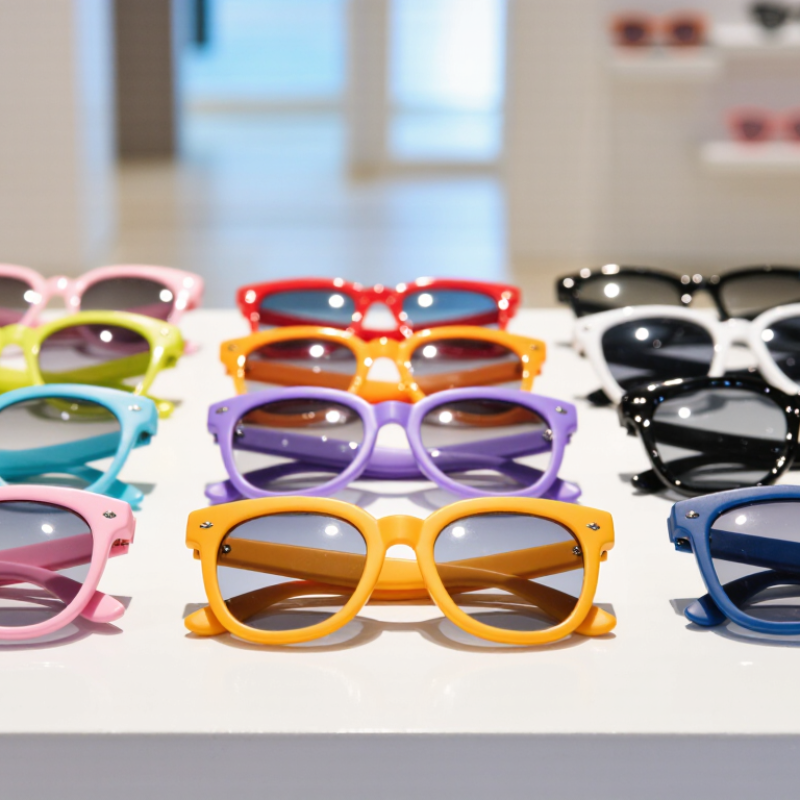
China Top 10 Kids Sunglasses Manufacturers?

What Defines a Leading Kids’ Sunglasses Manufacturer in China?

A leading kids’ sunglasses manufacturer in China is defined by child-specific engineering, not factory size. The World Health Organization identifies children as especially vulnerable to ultraviolet exposure because their eyes transmit more UV radiation. Therefore, reliable factories test lens UV transmission, optical quality, impact resistance, and frame durability. A dark lens alone proves very little.

Market pressure is also rising. Grand View Research valued the global eyewear market at more than US$110 billion in 2023, with continued growth expected through 2030. This competition can encourage faster production, but speed should not replace inspection. During a factory audit, buyers should review mold maintenance, batch records, incoming material checks, and independent laboratory reports. A serious manufacturer should apply the same optical discipline to Man Sunglasses, without treating children’s frames as smaller adult products.

Comfort reveals practical experience. Rounded edges, flexible temples, low frame weight, and soft nose contact matter during school days and outdoor play. Manufacturers should also test hinges after repeated opening and closing. Even strong factories can miss small weaknesses, especially in first samples. I would request several production batches, not one polished prototype. Supplier transparency matters too: clear corrective-action records often reveal more than impressive showroom displays. Standards such as ISO 12312-1 can guide testing, but real quality still depends on consistent execution.

Key Materials and Safety Standards for Children’s Sunglasses

When comparing China’s top 10 kids’ sunglasses manufacturers, material selection deserves close attention. A lightweight frame should not become brittle in a cold classroom or a hot car. Flexible nylon or TR90-style materials can reduce breakage during daily play. Polycarbonate lenses are practical because they are light and resist impact better than ordinary glass. Soft silicone nose pads may improve comfort, but they still need secure attachment.

Safety claims require evidence, not attractive packaging. Parents and buyers should request UV transmission test reports, especially for UVA and UVB protection. “UV400” wording alone is not enough. Check whether products meet relevant standards, such as EN ISO 12312-1, AS/NZS 1067.1, or applicable national requirements. Impact testing, sharp-edge inspection, hinge strength, and lens retention also matter. A frame can feel strong in the hand and still fail under repeated bending.

Tips: Check the child’s fit while moving, not only while sitting. The lenses should cover the eyes without touching eyelashes. Look for smooth edges, secure hinges, and clear material records. Avoid loose decorative parts. A lower price may hide weaker testing or inconsistent batches. In practical product checks, I would also inspect several units from the same shipment, because one perfect sample proves very little. No checklist is flawless, and real use can reveal problems that laboratory reports miss.

China’s Top 10 Kids’ Sunglasses Manufacturers

China’s top 10 kids’ sunglasses manufacturers are best judged by evidence, not factory size alone. These suppliers typically serve optical wholesalers, children’s retailers, and private-label buyers. Their strengths include injection molding, lens production, assembly, and export support. A reliable manufacturer should provide clear material specifications, sample approval, and traceable quality records.

The leading ten often use lightweight TR90, flexible nylon, or carefully finished acetate frames. Rounded edges matter because children handle sunglasses roughly. Spring hinges, soft nose bridges, and adjustable temples can improve daily comfort. Polarized lenses may reduce glare near water, playgrounds, and car windows. Buyers should still check optical clarity, UV protection test reports, and age-appropriate sizing. Some factories also produce adult collections, including Sunglasses Men styles, but children’s designs need different fitting standards.

Factory visits can reveal details that catalogs hide. Check storage conditions, lens-cleaning procedures, mold maintenance, and final inspection tables. Ask how defective frames are separated and recorded. Many suppliers look professional during negotiations, yet their sample consistency may weaken during mass production. That risk deserves attention. Certification documents should be current and independently verifiable for the destination market. Pricing alone is a poor ranking method; communication speed, sampling discipline, packaging accuracy, and after-sales responsibility often matter more. Some manufacturers may need stronger color consistency or better documentation, so buyers should compare samples before signing large orders.

Product Designs, Age Groups, and Customization Options

When comparing China’s top kids sunglasses manufacturers, product design should match real childhood behavior. Infants need soft, lightweight frames with wide temples and flexible bridges. For ages three to six, rounded lenses and smooth edges reduce pressure during active play. Older children often prefer slimmer shapes, brighter colors, and styles resembling adult eyewear. Fit matters more than decoration.

Reliable manufacturers usually offer several lens choices, including impact-resistant polycarbonate and polarized options. UV protection claims should be supported by clear test reports, not printed promises alone. Hinges deserve attention too. Flexible hinges can tolerate frequent opening and accidental drops. Still, no frame is unbreakable. That detail should remain visible in product discussions.

Customization may include frame colors, lens tints, logo placement, packaging, and adjustable straps. Some factories can modify temple length, bridge width, and nose-pad structure for different age groups. Small production runs may cost more, especially with custom molds. Buyers should request physical samples before approving large orders. Photos can hide uncomfortable edges or loose hinges. I have found that attractive samples sometimes fit poorly after several minutes of wear. That weakness deserves honest review.

Manufacturers should also provide size charts, material specifications, inspection records, and consistent color samples. Children grow quickly, so adjustable features can extend product usefulness. However, overly complicated adjustments may frustrate young users. Simple designs often perform better in daily use.

Manufacturing Quality, Certifications, and Export Capabilities

Choosing among China’s top 10 kids sunglasses manufacturers requires more than comparing prices. Manufacturing quality starts with child-safe materials, smooth edges, secure hinges, and lenses that block tested ultraviolet radiation. A reliable factory should explain its testing process clearly. Ask for recent third-party reports, not only internal claims.

Certifications can reveal production discipline. ISO 9001 supports consistent quality management, while EN ISO 12312-1, applicable regional standards, or ASTM requirements may support market entry. Requirements differ by destination. For a Red Sunglasses order, color consistency should also be checked under natural and warehouse lighting. Samples must match mass production. This detail is often overlooked.

Export capability includes accurate documents, protective packaging, labeling, and stable shipping coordination. Experienced manufacturers can provide material declarations, inspection records, carton specifications, and traceability codes. They should also manage private-label artwork without confusing safety information. No factory is perfect. An attractive certification folder may still hide weak hinge testing or inconsistent lens batches. Request a pilot order and inspect several cartons, not just one sample. Response speed matters, but honest answers matter more. A supplier that admits a limitation may be safer than one promising everything.

How to Select the Right Chinese Kids’ Sunglasses Supplier

Selecting the right Chinese kids’ sunglasses supplier takes more than comparing prices. Check the factory’s production experience, sample quality, and testing records. Ask whether lenses provide verified UV protection and whether frames meet suitable impact requirements. A supplier should explain these details clearly, not hide behind attractive catalog photos.

Request samples in several children’s sizes. Inspect the hinges, nose bridge, lens edges, and printed markings under bright light. A good supplier can provide material information, quality-control procedures, and pre-shipment inspection options.

During supplier discussions, the “Sunglasses Man” may sound confident, but confidence is not evidence. Compare written specifications with the physical sample.

Communication also matters. Ask about mold ownership, minimum order quantities, lead times, packaging, and replacement handling. A factory that answers quickly but vaguely can create expensive delays later. I once focused too heavily on frame appearance and overlooked loose hinges during a sample check. That was a useful mistake.

Build a checklist before contacting manufacturers, then record every change in writing. Visit the facility when practical, or request dated production photos and independent inspection support. Do not select a supplier only because it offers the lowest quotation. Children’s products need consistent sizing, clean finishing, reliable documentation, and careful batch control. Even a small scratch deserves attention.

FAQS

What makes a reliable children’s sunglasses manufacturer?

Child-specific engineering matters more than factory size. A reliable manufacturer tests UV transmission, optical quality, impact resistance, and frame durability. A dark lens proves very little.

Which frame features improve comfort for children?

Look for rounded edges, flexible temples, low weight, and soft nose contact. These details matter during school, travel, and outdoor play. Fit beats decoration.

How should sunglasses designs differ by age?

Infants need soft, lightweight frames with flexible bridges. Children aged three to six benefit from rounded lenses and smooth edges. Older children may prefer slimmer shapes and brighter colors.

Which lens materials and features should buyers consider?

Impact-resistant polycarbonate can improve everyday durability. Polarized lenses may reduce glare during outdoor activities. UV protection needs supporting test reports, not printed claims alone.

What customization options can manufacturers provide?

Common options include colors, lens tints, packaging, artwork, and adjustable straps. Some factories modify temple length, bridge width, and nose-pad structure. Simple adjustments usually work better.

How can buyers check production quality before placing large orders?

Request physical samples and several production batches. Inspect hinges, edges, lens consistency, and fit after several minutes of wear. One polished sample is not enough.

Which documents and certifications should buyers request?

Ask for recent independent laboratory reports, material specifications, inspection records, and size charts. Quality management certifications can support process consistency. Destination requirements still differ.

What should buyers inspect during a factory audit?

Review mold maintenance, incoming material checks, batch records, and corrective-action reports. Inspect several cartons from a pilot order. Showroom displays can mislead.

What does strong export capability include?

It includes accurate documents, protective packaging, labeling, carton specifications, and traceability codes. The manufacturer should separate safety information from private-label artwork. Fast replies are useful, but honest answers matter more.

Are children’s sunglasses completely unbreakable?

No frame is unbreakable. Flexible hinges can tolerate repeated opening and accidental drops, but weaknesses may remain. Manufacturers should explain limitations clearly. I would question perfect promises.

Conclusion

China has become a major sourcing destination for Kids Sunglasses, offering a wide range of manufacturers with different production strengths, design capabilities, and export experience. Leading suppliers typically focus on child-friendly materials, lightweight construction, impact resistance, UV protection, and comfortable designs suitable for various age groups. They may provide options such as flexible frames, colorful styles, polarized lenses, adjustable features, and customized packaging or branding services. Safety testing, consistent quality control, and compliance with recognized international standards are also important indicators of a reliable manufacturer.

This overview introduces ten notable types of Chinese Kids Sunglasses manufacturers and compares their product development, customization options, manufacturing systems, certifications, and overseas supply capabilities. It also explains how buyers can evaluate a supplier by reviewing material quality, age-specific designs, production capacity, sample performance, communication, delivery reliability, and documentation. Selecting the right partner requires balancing safety, design appeal, pricing, minimum order quantities, and long-term service to ensure dependable products for children and the target market.
Liam

Liam

Liam is a seasoned marketing professional with extensive expertise in the eyewear industry. With a background in technology-driven manufacturing and global sales, he has devoted himself to enhancing the online presence of his company through insightful and engaging content. Over the years, Liam has......
Previous How to Find Wholesale Eyeglasses Suppliers in 2026