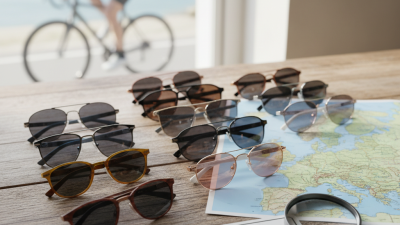
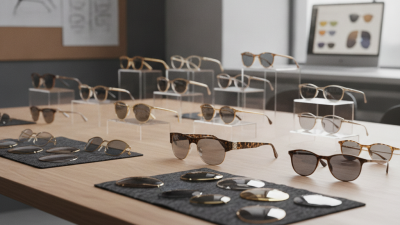
China’s Bamboo Sunglasses market is definitely getting more attention these days—mostly because eyewear brands are hunting for lighter materials and stronger sustainability stories. Grand View Research put the global eyewear market at around USD 118.5 billion in 2023, and its forecast suggests growth will keep going through 2030. But here’s the thing: bamboo on its own doesn’t automatically mean responsible production. You still have to check material sourcing, adhesive safety, hinge quality, and finishing standards pretty carefully.
Sustainability leader Jochen Zeitz once said, “Sustainability is not about doing less harm. It’s about doing more good.” That’s a pretty useful test for any Bamboo Sunglasses supplier. A credible manufacturer should be able to explain where its bamboo comes from, how it’s processed, what testing it does, and how the factory is controlled. FSC certification can help with traceability, sure—but buyers should still confirm the certificate’s scope and whether it’s valid. Small details matter, too. A smooth temple, an aligned hinge, and a clean protective coating often tell you more than a polished catalog image ever will.
This guide looks at China’s top Bamboo Sunglasses suppliers using practical buying criteria. That includes production experience, customization capability, export communication, quality consistency, and environmental documentation. Supplier rankings are never perfect, of course. Public information can be incomplete, and factory claims can change. So physical samples, inspection reports, and direct audits are still really important. Readers should compare each company carefully before placing an order. A beautiful frame is only the beginning—reliable performance has to be proven.
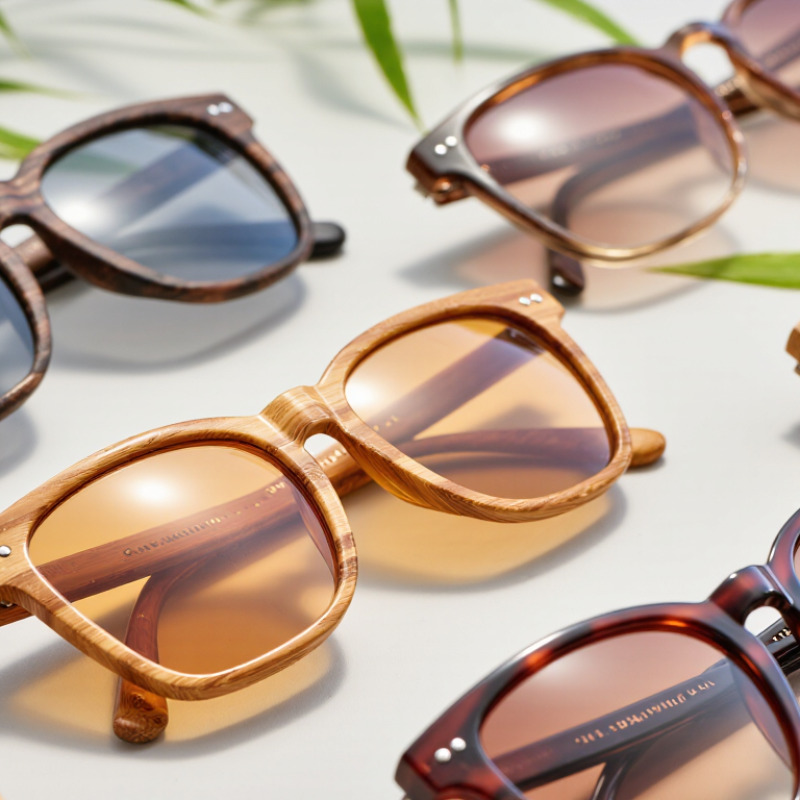
Bamboo Sunglasses in China: Market Scope and 2024 Industry Signals
China Top 10 Bamboo Sunglasses Suppliers
China’s bamboo sunglasses sector is gaining attention as buyers seek lighter, renewable-looking materials. Grand View Research valued the global eyewear market at about USD 146.3 billion in 2023. It also forecasts an 8.1% CAGR from 2024 to 2030. This wider growth supports new material experiments, including bamboo frames and bamboo-fiber composites. However, bamboo sunglasses remain a niche segment. Public market data is still limited.
China offers broad manufacturing capacity, including CNC cutting, lamination, laser engraving, and polarized lens assembly. Trade Map data continues to identify China as a major sunglasses exporter. In 2024, buyers are watching three signals: traceable bamboo sources, stable hinge quality, and smaller production runs. Suppliers serving Man Sunglasses projects should provide material certificates, coating details, and sample test records. A beautiful wood grain means little if the temples warp after humidity exposure.
Tips: Ask for three samples from different production batches. Test hinge alignment, surface smoothness, lens clarity, and packaging damage. Bamboo is not automatically greener. Adhesives, coatings, transport, and waste still matter. The environmental claim needs evidence. One weak point remains: many supplier pages show attractive photos but limited factory data. That deserves caution. A detailed audit may cost more, yet it can prevent inconsistent color, cracked laminates, and delayed delivery.
China Bamboo Sunglasses: Market Scope and 2024 Industry Signals
A non-company-specific supplier evaluation framework based on the main procurement and market factors relevant to bamboo sunglasses in China. Scores represent relative importance on a 0–100 scale, not company market share.
The strongest 2024 signals are bamboo material availability, export-oriented manufacturing capability, and product customization. Sustainability documentation and design differentiation are increasingly important for international buyers.
How the Top 10 Suppliers Were Screened by Capacity, Certifications, and MOQ
China Top 10 Bamboo Sunglasses Suppliers
The top ten suppliers were screened through practical evidence, not attractive catalog photos. Capacity was assessed by production lines, monthly output, sample speed, and delivery records. Numbers alone mislead. A supplier reporting high volume should explain its equipment, workforce, and quality-control checkpoints. Factory images, recent orders, and live production checks provided stronger evidence than unsupported claims.
Certifications formed the second filter. Documents were reviewed for scope, validity, issuing bodies, and matching factory addresses. Relevant quality, material, environmental, and product-safety records were considered. Certification logos are not enough. Test reports for lenses, hinges, coatings, and bamboo components added useful technical support. Some documents were incomplete, so they received lower confidence rather than automatic rejection.
MOQ was evaluated separately for stock models, customized designs, packaging, and replacement parts. A low MOQ may suit testing, but it can involve higher prices or limited materials. Each supplier was asked for sample costs, production schedules, payment terms, and defect-handling procedures. Capacity received the strongest weighting, followed by certification quality and MOQ flexibility. Communication and traceability affected the final ranking. This model has limits. Factory data can change quickly, and remote audits may miss small process failures. I would recheck production capacity and certificates before placing a large order.
Supplier Profiles: Materials, Production Scale, and Customization Data
China’s top ten bamboo sunglasses suppliers show a broad mix of materials and production capabilities. Most profiles list laminated bamboo, natural bamboo veneer, stainless steel hinges, and plant-based acetate. Several suppliers use polarized CR-39 or nylon lenses, while others offer mineral glass on request. Bamboo layers are commonly pressed, dried, and sealed with a clear coating. The finish matters. Poor sealing can cause swelling around the nose bridge.
Reported monthly capacity ranges from 8,000 to 60,000 pieces. Smaller workshops often support low minimum orders between 100 and 300 units. Larger factories may require 500 to 1,000 units, especially for custom molds.
These figures should be checked against recent production records, not only catalog claims. Capacity is not the same as stable output.
Customization data includes laser engraving, logo placement, bamboo color, lens tint, temple shape, packaging, and recycled-paper options. Sampling commonly takes 7 to 15 days, with bulk production lasting 20 to 45 days. Some suppliers provide 3D drawings before tooling, which reduces measurement errors. Others rely on buyer-supplied files and charge separately for revisions. That difference can affect the final cost. I would also request hinge-cycle testing, coating samples, and a pre-shipment inspection. A beautiful sample can still hide uneven grain, loose screws, or inconsistent lens alignment. Some profiles lack clear defect-rate data, and that gap deserves attention.
Lens Safety Benchmarks: ISO 12312-1, UV400, and Category 3 Standards
China Top 10 Bamboo Sunglasses Suppliers
When assessing bamboo sunglasses suppliers in China, lens safety deserves more attention than frame appearance. ISO 12312-1 covers general requirements for sunglasses used in everyday sunlight. It addresses optical quality, mechanical strength, and protection from excessive radiation.
UV400 means the lenses should block ultraviolet wavelengths up to 400 nanometers. This claim should be supported by independent test data, not only printed packaging. Ask suppliers for recent laboratory reports, test methods, and sample details. The report should match the exact lens material and coating. Small changes matter.
Category 3 lenses
usually transmit 8% to 18% of visible light. They work well in bright outdoor conditions, such as beaches, open roads, and high-glare locations. They are not designed for driving at night. A clear lens can still offer UV protection, while a dark lens may offer poor protection. Darkness is not safety.
For Sunglasses Men, check fit, optical clarity, and stable hinge movement alongside certification. Hold each sample toward a straight edge. Distorted lines may reveal uneven lenses. I have found supplier documents that looked convincing but lacked batch identification. That weakness needs questioning. A responsible supplier should explain corrective actions, retesting schedules, and quality inspection records without hesitation. Supplier rankings can change quickly. Verification should remain practical and repeated.
Comparing Bamboo Species, Frame Durability, Weight, and Sustainability Metrics
When comparing China’s top 10 bamboo sunglasses suppliers, species choice deserves close attention. Moso bamboo offers consistent texture and moderate density, while Guadua usually provides thicker, tougher fibers. Published engineering data places bamboo density roughly between 0.3 and 0.8 g/cm³, depending on species and moisture. That range can produce noticeably lighter frames than many hardwood alternatives. However, “bamboo” is not one uniform material.
Frame durability depends on processing, not species alone.
Multi-layer lamination, fiber direction, hinge attachment, and moisture sealing affect daily performance. Suppliers should provide results from eyewear tests aligned with ISO 12870, including hinge fatigue and lens retention. A poorly sealed temple may swell after repeated exposure to sweat. It looks minor. It is not. My practical concern is that catalog claims often describe bamboo generally, without identifying the exact species or adhesive system.
Sustainability comparisons also need measurable evidence. INBAR and FAO reported approximately 35 million hectares of bamboo globally in 2023, showing substantial resource availability. Yet fast growth does not automatically prove low impact. A credible supplier should disclose plantation origin, transport distance, adhesive content, coating chemicals, production waste, and end-of-life options. Life-cycle assessments following ISO 14040 and ISO 14044 can support those claims. For a Red Sunglasses collection, dyed finishes may add weight and chemical processing, so buyers should request product-level data rather than relying on attractive green language. The uncomfortable truth: supplier rankings remain incomplete when carbon data is estimated instead of verified.
Export Readiness: Lead Times, Compliance Documents, Packaging, and Order Terms
For China’s top 10 bamboo sunglasses suppliers, export readiness matters more than catalog variety. UNCTAD’s Review of Maritime Transport 2024 states that over 80% of global merchandise trade moves by sea. Therefore, a quoted 15-day production period does not equal a 15-day delivery. Ask for production, inspection, port, and customs timelines separately. A Sunglasses Man buyer should request a dated sample approval and a written delay procedure.
Compliance documents should match the destination market. Request material declarations, UV transmission test reports, and lens impact results. EN ISO 12312-1 may apply to general-use sunglasses in many markets, while children’s products can require additional testing. Ask for REACH-related declarations when selling into Europe. The World Bank’s 2023 Logistics Performance Index shows that customs efficiency and shipment tracking remain major logistics differences between countries. Document control is not paperwork theater. It protects the purchase order.
Packaging needs practical testing. Use recycled-paper cartons only after compression and drop checks. Bamboo frames can suffer from moisture, especially inside poorly sealed master cartons. Specify inner sleeves, desiccant requirements, carton dimensions, and barcode placement. Confirm whether packaging is included in the unit price. Payment terms deserve equal attention: negotiate a deposit, inspection milestone, and balance after approved documents. Tips: request a pre-shipment inspection, compare two freight quotes, and record every tolerance. I would not trust “ready stock” without current photos, carton counts, and a packing list. That assumption often fails.
Buyer Evaluation Matrix: Pricing, Quality Control, Warranty, and Supplier Risk
A buyer evaluation matrix makes China’s top 10 bamboo sunglasses suppliers easier to compare. Record unit pricing at three order volumes, including lenses, cases, packaging, and shipping. A low quote may hide mold charges or expensive sample revisions. Ask for a written breakdown.
Quality control deserves measurable evidence. Check bamboo moisture, hinge alignment, lens clarity, and surface finishing on production samples. Request inspection photos, batch records, and test reports for UV protection. Suppliers with stable procedures usually explain their inspection stages clearly. Still, documents are not proof by themselves. I would inspect a pre-shipment sample, because small defects can escape a factory’s final check. Warranty terms should state coverage, claim deadlines, replacement quantities, and response time. A twelve-month warranty sounds useful, but vague exclusions reduce its value.
Tips: Score each supplier from one to five, then attach evidence to every score. Review payment terms, export experience, production capacity, and material traceability. Ask how they handle cracked frames or inconsistent color batches. Keep a small reserve for rework. My scoring is not perfectly objective, especially when communication feels unusually smooth. That is why I would repeat key questions through email and compare the written answers. A safer supplier accepts reasonable inspection conditions, identifies production limits, and avoids promising impossible delivery dates.
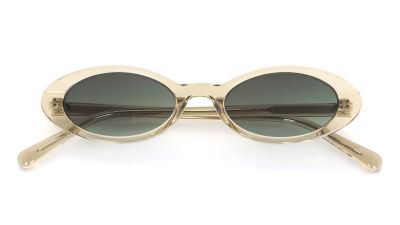
Champagne Oval Acetate Sunglasses: Wholesale Trends, Custom Logo Options, and China Factory Sourcing
Champagne Oval Acetate Sunglasses are gaining attention in wholesale eyewear because they combine a soft neutral color with a distinctly retro silhouette. Market data supports this direction: Grand View Research valued the global eyewear market at approximately USD 143.8 billion in 2023 and projects continued growth through 2030, driven partly by fashion-led frame designs and online retail. Compared with conventional oval glasses, the narrow oval profile creates a stronger vintage impression while visually lengthening the face. Its relaxed, slightly cat-eye character is especially suitable for round and square facial shapes, making it a versatile option for seasonal collections and boutique assortments.
For wholesalers sourcing from China, acetate offers practical advantages in color development, surface finishing, and small-batch customization. A factory-based full-customization service can support champagne tones, translucent textures, polished or matte surfaces, bespoke frame widths, temple lengths, and engraved logos. According to the 2024 *McKinsey State of Fashion* report, consumers increasingly value distinctive products and personalization, creating opportunities for private-label eyewear programs rather than standardized catalog buying. Suppliers can therefore prepare logo samples, color cards, size drawings, packaging specifications, and pre-production prototypes before bulk manufacturing, helping buyers control consistency across B2B branding projects and personalized C-end collections.
FAQS
It addresses optical quality, mechanical strength, and protection from excessive sunlight radiation. It supports everyday-use safety. Check the exact standard version.
UV400 indicates protection against ultraviolet wavelengths up to 400 nanometers. Ask for independent laboratory evidence. Printed packaging alone is weak proof.
No. A clear lens may block ultraviolet light effectively. A dark lens may still provide poor protection. Darkness is not safety.
Category 3 lenses usually transmit 8% to 18% of visible light. They suit beaches, open roads, and bright outdoor conditions. They are not intended for night driving.
Hold each lens against a straight edge. Wavy or distorted lines may show uneven surfaces. Test fit, clarity, and hinge movement too.
The report should identify lens material, coatings, samples, test methods, and batch details. Small changes matter. Missing batch information deserves questioning.
Separate production, inspection, port, and customs timelines. A 15-day production period is not a 15-day delivery. Request dated sample approval and delay procedures.
Request material declarations, ultraviolet transmission reports, and impact results. Destination markets may require additional testing. Specify sleeves, moisture protection, carton sizes, desiccants, and barcodes.
Consider a deposit, inspection milestone, and balance after approved documents. Request pre-shipment inspection and compare freight quotations. I would not trust “ready stock” without current photos and a packing list.
Conclusion
This guide presents a practical overview of China’s Bamboo Sunglasses industry, focusing on market scope, 2024 production signals, and the criteria used to screen leading suppliers. It explains how manufacturing capacity, certifications, minimum order quantities, material options, customization capabilities, and quality-control systems influence supplier selection. It also reviews lens safety benchmarks, including ISO 12312-1, UV400 protection, and Category 3 requirements, helping buyers assess product performance and compliance documentation.
The article compares bamboo species, frame durability, product weight, sustainability indicators, and finishing quality, while also examining export readiness through lead times, packaging, order terms, and shipping documents. A buyer evaluation matrix brings these factors together by comparing pricing, inspection procedures, warranty policies, communication efficiency, and supplier risk. The goal is to help importers and distributors make informed, transparent purchasing decisions and identify suppliers capable of delivering consistent quality, responsible materials, and reliable customized production.