Leave Your Message
So, finding reliable wholesale eyeglasses suppliers in 2026? It’s not just about comparing prices in catalogs. Robert Chen, an optical sourcing consultant, puts it this way: “A dependable supplier proves quality before asking for a large order.” Honestly, that makes sense. A slick website doesn’t mean much if you can’t trace the product details, get a quick reply, or count on samples being consistent.
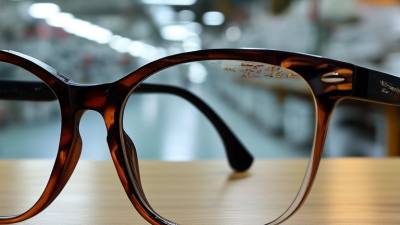
Start by looking at suppliers who are upfront about their materials, lens options, certifications, and where they actually produce. Before you even think about a long-term deal, ask for samples. Then hold the frames up under a bright light—really look at them. Check the hinge tension, temple alignment, surface finish, and any printed markings. Sometimes the smallest defects are the biggest clue that quality control isn’t where it should be.
So, definitely ask about minimum order quantities, private-label options, packaging, replacement policies, and production schedules. A supplier who's actually serious should be able to spell all that out—no vague 'we'll work with you' kind of promises. And yeah, get three quotes and compare them, but don't just jump at the cheapest one. Things like freight, inspection fees, customs handling, and damaged-stock losses can all sneak in and change what you end up paying.
Wholesale Optical Frames are kind of their own beast, honestly. Why? Because frame geometry can make or break comfort, fit, and how many returns you end up dealing with. So it's worth checking things like bridge widths, temple lengths, what sizes are actually available, and whether colors stay consistent. And here's a good question to ask a supplier: can they repeat a popular model next season? Their answer might tell you quite a bit about their production limits.
So, where do you start? Try trade directories, optical exhibitions, verified business profiles, and—don't underestimate this—referrals from retailers who've been around a while. Also check company registration and payment security through independent sources. One catch: online reviews can be incomplete or just plain outdated. Use them as hints, not hard proof.
And remember, the best supplier isn't always the biggest one. It's the partner who actually documents quality, answers the tough questions, and fixes mistakes fast when they happen. Start slow. Let trust build from evidence.
How to Find Wholesale Eyeglasses Suppliers in 2026
The World Health Organization estimates that at least 2.2 billion people live with near or distance vision impairment. Its World Report on Vision also notes that nearly half of these cases could have been prevented or remain unaddressed. This is a strong demand signal, but it is not a direct sales forecast. Not every person needs eyeglasses, and affordability, eye examinations, and local prescriptions affect purchasing decisions.
For 2026 sourcing, convert the WHO figure into smaller market assumptions. Separate adults, children, reading needs, distance correction, and replacement demand. UN World Population Prospects 2024 shows continued population growth in several regions, yet age structures vary widely. A supplier should therefore provide flexible quantities, multiple frame sizes, prescription-ready designs, and clear material specifications. Ask for test reports, product dimensions, coating details, and documented quality-control procedures.
Industry eyewear analyses generally expect steady market growth through the decade, but forecasts differ by methodology and region. Treat them as planning references, not certainty. A practical trial might begin with 100 to 300 units across several prescriptions and frame shapes. Track sell-through, returns, bridge fit, and customer complaints. The weak point is obvious: a global estimate can hide local realities. A low-income market may show urgent need but limited purchasing power. Supplier samples should be checked manually, because catalog photographs often conceal weight, hinge tension, or uneven finishing.
| Planning Dimension | Evidence or 2026 Planning Value | Calculation or Interpretation | Wholesale-Sourcing Implication |
|---|---|---|---|
| Global people with vision impairment | At least 2.2 billion people | WHO reports that at least 2.2 billion people have near or distance vision impairment globally. | Use this as the top-down ceiling for long-term optical-product demand, not as an immediate eyeglass-order forecast. |
| Preventable or unaddressed need | At least 1.0 billion people | WHO states that vision impairment could have been prevented or remains unaddressed for at least 1 billion people. | Prioritize suppliers able to support affordable frames, basic prescription ranges, replacement parts, and consistent repeat orders. |
| Primary product opportunity | Prescription eyeglass frames and complete prescription eyewear | Uncorrected refractive error is identified by WHO as a major cause of vision impairment. | Search for suppliers offering optical frames in multiple bridge widths, temple lengths, lens shapes, and prescription-compatible materials. |
| Illustrative annual unit opportunity — conservative | 250 million frame-equivalent units per year | Planning scenario: 1.0 billion unaddressed people × 25% conversion × 1 replacement every 4 years. | Suitable for cautious inventory planning when entering a new market or testing a new supplier. |
| Illustrative annual unit opportunity — base case | 500 million frame-equivalent units per year | Planning scenario: 1.0 billion unaddressed people × 50% conversion × 1 replacement every year. | Use only as a broad demand-sizing scenario; validate it with local prescription data, retail sell-through, and reorder rates. |
| Illustrative annual unit opportunity — expanded case | 1 billion frame-equivalent units per year | Planning scenario: 1.0 billion unaddressed people × 100% conversion × 1 replacement every year. | Treat this as an upper-bound scenario rather than a sales forecast. |
| Supplier product categories to compare | Optical frames, complete glasses, ready-made reading glasses, children’s frames, replacement components | Different categories serve different prescription, fit, age, and distribution requirements. | Request separate catalogs and price lists for each category instead of comparing all products under one average price. |
| Initial supplier sample size | 3–5 qualified suppliers | Recommended buyer-screening target; it allows comparison of quality, pricing, communication, and delivery performance. | Shortlist suppliers only after checking legal business details, product documentation, samples, and export capability. |
| Sample evaluation criteria | Fit, hinge durability, surface finish, lens compatibility, packaging, labeling, and defect rate | A sample should be evaluated against the same specifications used for the planned production order. | Create a written scorecard and reject suppliers that cannot provide repeatable quality controls. |
| Compliance documents to request | Material declarations, test reports, labeling details, quality-system documents, and destination-market conformity records | Required documents differ by product type and destination market, so requirements must be checked locally. | Do not rely on a generic certificate image; verify document scope, validity, issuing body, and product coverage. |
| Commercial terms to compare | Minimum order quantity, sample cost, unit price, tooling cost, payment terms, production lead time, shipping terms, and defect replacement policy | The lowest unit price may not produce the lowest landed cost after freight, duties, inspection, and defective units. | Compare suppliers using total landed cost and expected reorder reliability, not quoted price alone. |
| 2026 validation metrics | Sell-through rate, reorder interval, return rate, defect rate, average order value, and stockout frequency | These metrics convert the WHO-based top-down estimate into a market-specific forecast. | Recalculate purchase quantities quarterly and increase orders only when actual sell-through and reorder data support expansion. |
Source: World Health Organization, “Blindness and vision impairment,” reporting at least 2.2 billion people with near or distance vision impairment and at least 1 billion cases that could have been prevented or remain unaddressed. The annual unit figures are clearly labeled planning scenarios and are not WHO forecasts.
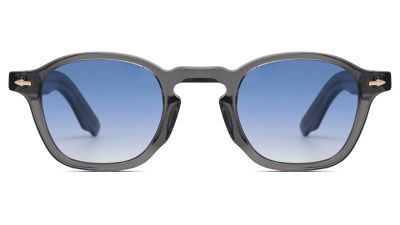
For wholesale buyers seeking luxury UV-protective eyewear, unisex square sunglasses from China offer a practical balance of modern style, reliable performance, and production flexibility. Their structured square silhouette suits a wide range of face shapes and appeals to both men and women, making them suitable for optical retailers, fashion stores, travel shops, and online collections. High-quality UV400 nylon lenses help protect the eyes from harmful ultraviolet rays while remaining lightweight and comfortable for daily wear, commuting, and travel.
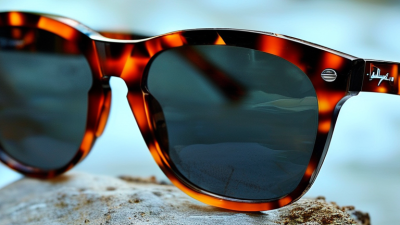
The premium acetate frame provides a refined appearance with strong resistance to deformation, surface wear, and frequent handling. Its durable construction supports long-term use while allowing buyers to select different frame colors and coordinated lens gradient effects for seasonal or market-specific collections. For wholesale programs, the combination of versatile sizing, unisex styling, and dependable materials can simplify inventory planning and broaden customer appeal.
As a China-based factory supplier, production can be adjusted to match a buyer’s visual and packaging requirements. Available options may include logo engraving, customized frame and lens combinations, branded presentation boxes, protective cases, and personalized packaging inserts. Each order can be reviewed through sample approval and quality checks covering lens clarity, UV protection, frame alignment, hinge performance, finishing, and packaging consistency. Flexible quantities and design coordination make these sunglasses suitable for retailers developing exclusive private-label eyewear lines.
The estimate signals broad need, not guaranteed sales. Separate adults, children, reading needs, distance correction, and replacement demand. Local income and examinations still matter. Treat it as a starting point, not a forecast.
Look for multiple frame sizes and prescription-ready designs. Small bridges may suit children or narrower faces. Ask for clear material specifications, lens options, dimensions, and coating details. Flexibility is valuable.
A trial order of 100 to 300 units can reduce early risk. Mix several frame shapes and prescription ranges. Track sell-through, returns, bridge fit, and complaints. My assumption may still be wrong.
Compare MOQ, lead time, defect rate, and monthly production capacity. Request written MOQs by style, color, and lens option. A low MOQ can increase unit cost. Record every figure in one sheet.
Check hinge tension, frame alignment, polishing, lens clarity, and packaging. Handle each sample manually. Catalog photos hide uneven finishing. Look closely. Also check scratch resistance and supporting test documents.
Lead time should cover sampling, production, inspection, and shipping preparation. A seven-day promise may exclude material delays. Request a written production calendar. Verify recent delivery records, not only capacity claims.
Add product cost, export fees, freight, insurance, duty, brokerage, handling, and local delivery. For example, 500 frames at four dollars each equal 2,000 dollars before shipping. Currency changes and carton size can alter the final cost.
Spectacle frames often fall under HS 9003, but classification depends on product details. Confirm the code with a customs broker and the destination tariff database. Under EXW, FOB, CIF, and DDP, costs and risks differ. Read every quotation carefully.
Finding reliable Wholesale Eyeglasses suppliers in 2026 requires a structured evaluation of demand, product quality, compliance, and total costs. Start by using global vision-impairment estimates to assess market potential, then classify frames according to relevant ISO 12870 and ANSI Z87.1 requirements. Suppliers should also provide evidence of compliance with applicable FDA 21 CFR 801.410 and EU MDR 2017/745 obligations, where relevant to the products and target markets.
Compare minimum order quantities, lead times, defect rates, manufacturing capacity, and communication standards before selecting a partner. Calculate landed costs by considering HS 9003 classification, tariffs, freight, insurance, and Incoterms 2020 responsibilities. Request samples and evaluate lens impact resistance, hinge durability, frame alignment, comfort, and fit. Finally, use written contracts to define product traceability, warranty coverage, inspection procedures, corrective actions, and access to quality-control records. This approach helps reduce supply risks while supporting consistent, compliant, and cost-effective purchasing decisions.