Looking for top Metal Sunglasses manufacturers in China for global buyers? That's actually a pretty practical sourcing question. Buyers don't just need good-looking samples. They need stable alloys, accurate dimensions, coatings they can count on, and production they can trace.
Grand View Research valued the global eyewear market at around USD 115.9 billion in 2022. Its report also expects growth to continue through 2030. Mordor Intelligence sees the sunglasses market expanding over the same period too. These figures show demand is strong, sure, but they don't guarantee supplier quality. And that gap? It matters.
China is still a huge manufacturing base for frames and finished eyewear. The advantages are pretty clear: integrated supply chains, flexible tooling, and high-volume assembly. Companies like Wenzhou Wanhui Optical Co., Ltd., Taizhou Hongyuan Optical Co., Ltd., and Xiamen Jiamei Optical Co., Ltd. serve different kinds of buyers. Their capabilities can vary a lot, though. So buyers should verify them directly. Don't just take the website's word for it.
With metal sunglasses, you have to pay close attention to stainless steel, titanium, nickel content, soldering, and surface treatment. Even a nice polished hinge can fail after being opened again and again. A beautiful gold finish can fade under ordinary handling. It's the small details that matter.
A lot.
This guide compares Chinese manufacturers through practical buying criteria. These include material documentation, sample consistency, factory experience, quality inspection, production capacity, and export communication. Useful references include ISO 12312-1 for general sunglasses and ISO 12870 for spectacle frames. EU buyers should also review REACH requirements. US buyers may need extra product and labeling checks.
The market data is encouraging, but it's incomplete. Public reports rarely reveal defect rates or after-sales performance. That's why factory audits, pre-shipment inspections, and written specifications still matter. Good sourcing isn't just finding a low quote. It's about reducing the uncertainty you can avoid.
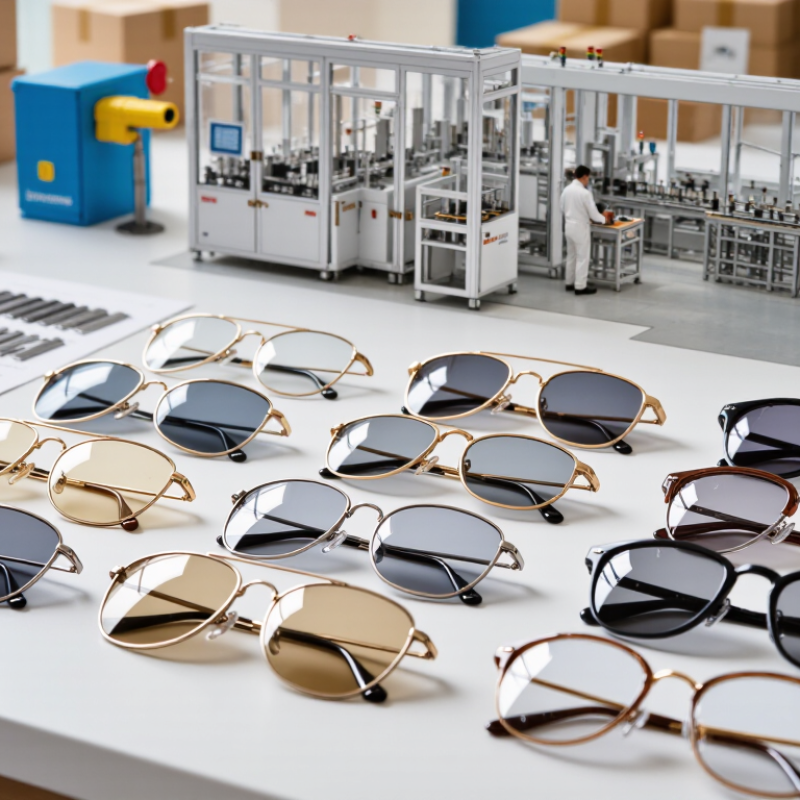
A top metal sunglasses manufacturer in China proves quality through repeatable production, not polished photographs. Experienced teams understand how stainless steel, titanium, and copper alloys behave during bending, welding, and surface finishing. Fit comes first. A frame should sit evenly, open smoothly, and keep its shape after repeated hinge movement.
Reliable manufacturers control each stage with documented inspections. They check metal thickness, solder joints, bridge alignment, lens grooves, and temple tension. Coating quality also deserves close attention. Salt-spray testing, adhesion checks, and color comparisons can reveal weak plating before shipment. Small details matter. A slightly uneven finish can become obvious under retail lighting.
Professional factories usually provide clear sampling records, material information, production timelines, and traceable inspection results. They can discuss lens compatibility, packaging protection, and export documentation without avoiding difficult questions. I have found that honest communication is often more valuable than a low quotation. Yet no factory is perfect. A first sample may pass visually but fail after repeated folding, and color batches can still vary. Serious manufacturers acknowledge these risks, adjust tooling, and invite practical feedback. Their strength lies in solving defects before large-scale production, while maintaining stable workmanship across changing orders.
China’s metal eyewear supply chain is concentrated in several practical manufacturing regions. Danyang in Jiangsu is known for large-scale optical production and integrated component sourcing. Zhejiang supports flexible workshops, metal forming, welding, and quick sampling. Guangdong offers stronger export experience, surface finishing, and packaging coordination. Each region has different strengths.
Experienced factories can produce Metal Frame Sunglasses through stamping, CNC cutting, laser welding, and manual polishing. They may offer stainless steel, titanium, or lightweight alloy options. A capable supplier should explain material grades clearly. Ask for hinge samples, plating records, and nickel-release test results. Small details matter. Nose pad arms must align evenly. Screws should turn smoothly without excessive resistance.
Production capacity alone does not prove reliability. Buyers should inspect process controls, sample consistency, and final inspection methods. Some suppliers provide color cards and measurement reports, while others depend too heavily on visual checks. That gap deserves attention. A frame can look polished but still fail during repeated opening tests. Regional expertise helps, yet communication remains essential. I have found that clear drawings, tolerance notes, and approved reference samples prevent avoidable revisions. No manufacturing cluster is perfect. Careful evaluation still makes the difference.
Metal frame selection affects comfort, durability, and long-term customer satisfaction. Stainless steel offers strength, stable shape, and competitive pricing. Titanium is lighter and resists corrosion, but it requires more precise forming equipment. Monel provides flexibility, although sensitive users may require careful coating and nickel-release checks. Material certificates should identify the alloy, surface treatment, and supplier batch.
Design quality appears in small details. Adjustable nose pads can reduce pressure during extended wear. Spring hinges improve flexibility, but they need consistent torque testing. Laser-welded joints create clean lines when heat control is accurate. Some factories use hand polishing before plating, leaving subtle differences between samples. Buyers should inspect several pieces, not one perfect prototype.
Production standards should cover incoming materials, lens fitting, hinge movement, coating adhesion, and dimensional accuracy. Reliable manufacturers maintain inspection records and traceability from wire stock to final packing. Testing may include corrosion exposure, fatigue cycles, nickel release, and lens retention. Requirements differ by destination market, so buyers must verify applicable standards independently. Factory audits are useful, but they cannot replace laboratory testing. A polished showroom can hide weak process control. Ask for recent reports, corrective-action records, and production samples. Small inconsistencies often reveal larger risks.
For global buyers, quality control in metal sunglasses begins before production. Experienced manufacturers check frame dimensions, alloy composition, solder points, hinge movement, and lens alignment. A small measurement error can create pressure behind the ears or uneven optical positioning. Incoming metal should be verified against purchase specifications, not accepted by appearance alone.
Compliance requires documented testing for the target market. Lenses should meet applicable UV protection and optical requirements, such as EN ISO 12312-1, ANSI Z80.3, or AS/NZS 1067.1. Requirements differ by destination. Metal parts also need screening for restricted substances, including nickel release, lead, and cadmium, where relevant. Test reports should identify the sample, production lot, laboratory, and test method. Traceability matters.
Factory audits can review calibration records, worker training, material certificates, and corrective-action reports. Sampling should cover hinges, lenses, coatings, and finished packaging. Keep records. A reliable supplier explains failures instead of hiding them. In practice, no inspection system is perfect. Random checks may miss a weak hinge or a coating defect. Buyers can reduce this risk through pre-shipment inspection, third-party laboratory testing, and retained samples. Clear acceptance limits are essential, especially for scratches, color variation, sharp edges, and logo placement. ISO 9001-based procedures can support consistency, but certification alone does not guarantee every shipment. Regular communication and honest review remain necessary when production changes.
Visible light transmittance (VLT) categories provide a practical quality-control reference for international sunglasses buyers. The ranges shown are based on the lens filter categories defined in EN ISO 12312-1. UV protection, impact resistance, labeling, and market-specific documentation should be verified separately through appropriate testing.
For global buyers, OEM and ODM services turn a basic eyewear idea into a market-ready product. Experienced manufacturers can develop Metal Frame Glasses from sketches, reference samples, or technical drawings. They can adjust bridge width, temple length, lens shape, and frame thickness for different markets. Clear specifications reduce misunderstandings during development.
Customization also covers materials, finishes, logos, packaging, and color matching. A reliable factory should provide prototypes before bulk production. Buyers should check solder joints, hinge movement, plating consistency, and lens alignment under direct light. Sample approval matters. Small errors become expensive when thousands of units are produced. Production records, inspection photos, and batch testing can improve traceability and confidence. Still, no process is perfect. A second review may catch what the first inspection misses.
Tips: Request a detailed quotation, material description, sample timeline, and inspection standard. Confirm minimum order quantities early. Ask how rejected components are handled. Keep one approved sample for comparison during production. Practical communication helps, but assumptions can create delays. When choosing an OEM or ODM partner, evaluate response speed, technical advice, quality consistency, and customization limits. A manufacturer that explains weaknesses honestly may be more dependable than one promising everything.
Pricing for Metal Eyeglass Frames depends on alloy choice, finishing, hinges, lenses, and packaging. Basic stainless-steel frames often receive lower quotes than titanium or custom-plated designs. A realistic supplier comparison should include tooling, sample fees, inspection, and export packaging. The cheapest quote may hide important costs. Request a detailed breakdown before approving production.
Minimum orders commonly range from 100 to 500 pieces per color or model. Custom colors may require higher quantities because plating tanks and paint batches need efficient use. Production lead times often reach 25 to 45 days after sample approval and deposit confirmation. Complex hinges, logo-free custom details, or mixed sizes can add several weeks. My early purchasing estimates were sometimes too optimistic. Factory schedules can change during peak seasons.
Tips: Ask for a physical sample, a written timeline, and clear payment stages. Confirm whether the MOQ applies per design, color, or total order. Keep one approved sample for future comparison. Build extra time for inspection and small corrections. A two-day delay at sampling can become a week during mass production. Also, verify material specifications and finishing consistency through documented quality checks. Each supplier should explain its process clearly, not only promise a low price.
When sourcing Metal Spectacle Frames, supplier reliability matters more than a polished website. Request factory photos, production videos, and current workshop details. A dependable manufacturer should explain alloy composition, plating thickness, hinge design, and tolerance ranges clearly. Ask for material reports from independent laboratories when specifications affect durability or skin contact.
Tips: Order samples before discussing large volumes. Inspect weld points, nose pads, temple alignment, screw tightness, and surface color under bright light. Measure each frame against the approved sample. Ask how defects are recorded and replaced. Strong suppliers provide inspection records, packaging details, and a clear production schedule. They should also identify the person responsible for quality decisions.
Visit the factory if possible, or arrange a live video inspection. Watch whether workers use calibrated tools and separate unfinished frames from completed products. Check monthly capacity, lead times, export experience, and communication speed. Written specifications reduce misunderstandings, especially for custom colors or logo placement. I once treated a sample as sufficient evidence; that was a weak decision. A larger batch can reveal loose hinges, uneven coating, or inconsistent dimensions. Reliable suppliers welcome reasonable audits and discuss problems without hiding them. Still, no supplier is perfect, so leave room for corrective actions, reinspection, and realistic delivery buffers.
| Evaluation Dimension | Recommended Weight | What Reliable Suppliers Should Demonstrate | Objective Data or Reference Point | How Global Buyers Can Verify |
|---|---|---|---|---|
| Material Transparency | 15% | A complete material declaration for the frame, hinges, nose pads, screws, plating, lenses and packaging. The supplier should identify whether the frame uses stainless steel, titanium, Monel, aluminum or other alloys. |
Stainless steel
Titanium
Monel
Aluminum
Material grades and surface treatments should be stated rather than described only as “metal.” |
Request a bill of materials, material certificates and a sample matching the declared construction. Compare the sample with the specification before approving bulk production. |
| Product Safety and Compliance | 20% | The supplier should understand the regulatory requirements of the destination market and provide test evidence for frames, lenses, coatings and restricted substances. | ISO 12870 covers ophthalmic spectacle frames. ISO 12312-1 covers general-purpose sunglasses and related sunglass requirements. EU buyers should also review applicable REACH restrictions, including nickel release requirements for articles in prolonged skin contact. | Check the test laboratory, report number, test date, tested model and whether the report matches the actual production material and construction. Do not rely on an unverified logo or certificate image alone. |
| UV and Lens Performance | 15% | Lenses should have declared optical properties, UV protection performance, visible-light transmission and an appropriate lens category for the intended market. | UV400 is a product claim indicating protection against ultraviolet wavelengths up to approximately 400 nm; it should be supported by a laboratory test. Sunglasses lens categories are commonly defined by visible-light transmission ranges under applicable standards. | Request lens transmission and UV test reports for the exact lens material and color. Confirm markings, labeling and user instructions required in the destination country. |
| Corrosion and Plating Durability | 10% | The supplier should specify the base metal, plating stack, coating method and inspection standard. Surface finishing should remain consistent around bridges, rims, temples and soldered areas. | Relevant evaluations may include corrosion resistance, coating adhesion, abrasion resistance, perspiration resistance and color consistency. Test conditions must be defined because results depend on the method used. | Review coating-process records and test reports, then inspect pre-production samples after simulated sweat, humidity and rubbing tests agreed in writing with the supplier. |
| Mechanical Reliability | 15% | Hinges, solder joints, welds, nose-pad mounts, temple arms and lens rims should withstand normal opening, closing, adjustment and handling without loosening or cracking. | ISO 12870 includes mechanical and dimensional considerations for spectacle frames. Buyers should define their own acceptance limits for hinge cycles, torque, deformation, lens retention and component detachment. | Approve a written inspection plan covering hinge operation, alignment, solder or weld quality, sharp edges, screw security and lens retention. Use independent pre-shipment inspection for higher-volume orders. |
| Quality Management System | 10% | A dependable factory should have documented incoming-material inspection, in-process controls, final inspection, nonconformance handling and traceability by batch or production order. | ISO 9001 certification can indicate a quality-management framework, but it does not by itself prove that every sunglasses model is compliant or defect-free. | Request the scope and validity of any quality certification. Ask for recent quality records, corrective-action examples, inspection checklists and the method used to control production changes. |
| Sampling and Product Development | 5% | The supplier should provide controlled samples, technical drawings, color references and a clear approval process before mass production. | Sample documentation should include dimensions, tolerances, lens color, frame finish, logo placement if applicable, packaging configuration and approved reference samples. | Sign an approval record for the final sample. Require written authorization for any change to metal alloy, plating, lens supplier, hinge design or packaging. |
| Production Capacity and Lead Time | 5% | Capacity claims should be supported by production planning, equipment availability, staffing and realistic lead-time commitments rather than a generic monthly output figure. | Lead time normally depends on tooling, material procurement, plating, lens production, assembly, inspection and packaging. A single “fast delivery” figure is not sufficient for comparison. | Request a process flow and sample production schedule. Compare promised dates with a pilot order and record delays, change notices and response times. |
| Order Flexibility and Minimum Order Quantity | 3% | The supplier should clearly separate minimum quantities for stock designs, custom colors, custom tooling, prescription-compatible lenses and private packaging. | Minimum order quantities vary by frame style, finish, lens specification and packaging. They should be quoted per model, color and configuration. | Obtain a written quotation showing unit price, tooling charges, sampling fees, minimum quantities, payment terms, packaging costs and the validity period of the offer. |
| Export Documentation and Traceability | 2% | The supplier should be able to provide consistent commercial invoices, packing lists, shipping documents, product specifications and batch information. | Core records should connect the purchase order, approved sample, production batch, inspection result and shipment. Document names and product descriptions should remain consistent. | Review a redacted set of prior export documents and verify that the legal entity, bank information, manufacturing location and shipping details are consistent across documents. |
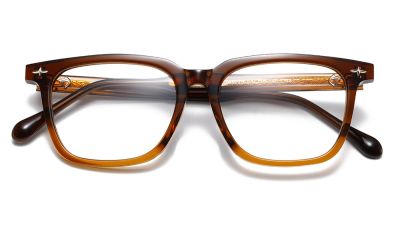
Vintage Bold Square Optical Frames combine classic character with practical everyday performance. Inspired by retro eyewear, the thick acetate construction creates a confident silhouette, while cross-and-arrow metal rivets add a distinctive decorative detail. According to Grand View Research, the global eyewear market was valued at approximately USD 115.9 billion in 2022 and is projected to grow at an 8.3% CAGR from 2023 to 2030, reflecting continued demand for expressive, durable frames. Reinforced rivet accents help support frame stability while giving the design a refined industrial touch.
The square profile features strong lines that can complement round, oval, and heart-shaped faces, making these optical frames a versatile unisex choice. They transition easily from professional offices and business meetings to casual weekends, offering bold visual impact without sacrificing functional wearability. As an experienced China suppliers factory, we provide flexible customization across acetate colors, rivet finishes, temple details, and logo applications. Market outlooks from Statista also indicate ongoing growth in eyewear consumption, supported by personalization and style-led purchasing, allowing optical retailers and private labels to develop collections tailored to specific audiences and brand identities.
Jiangsu supports large-scale optical production and component sourcing. Zhejiang offers flexible workshops, metal forming, welding, and quick sampling. Guangdong provides export experience, surface finishing, and packaging coordination. Each region has different strengths.
Common processes include stamping, CNC cutting, laser welding, and manual polishing. Materials may include stainless steel, titanium, and lightweight alloys. Ask for clear material grades. Do not rely on appearance alone.
Inspect hinge samples, plating records, and nickel-release test results. Nose pad arms should align evenly. Screws should turn smoothly. A polished frame may still fail repeated opening tests.
Confirm dimensions, alloy composition, solder points, hinge movement, and lens alignment. Verify incoming metal against written specifications. A small error may cause ear pressure or uneven lens positioning. Records help.
Request test reports for UV protection and optical performance. Applicable requirements depend on the destination market. Reports should identify the sample, production lot, laboratory, and test method. Traceability matters.
Use pre-shipment inspections and, when needed, independent laboratory testing. Retain an approved sample for comparison. Check hinges, lenses, coatings, packaging, scratches, and sharp edges. Random checks can still miss defects.
Suppliers may adjust bridge width, temple length, lens shape, and frame thickness. They can also customize materials, finishes, colors, packaging, and markings. Request prototypes before bulk production. Small errors become expensive quickly.
Ask for material descriptions, sample timing, minimum order quantities, inspection standards, and handling of rejected parts. Confirm details in writing. Assumptions create delays. A second review may catch overlooked problems.
China has become an important sourcing destination for Metal Sunglasses, offering manufacturers with capabilities ranging from precision metal forming and frame assembly to surface finishing, lens fitting, and packaging. Leading suppliers are commonly concentrated in established eyewear production regions, where experienced factories can provide stainless steel, titanium, aluminum, and mixed-material frames in diverse designs. Their strengths often include advanced equipment, skilled production teams, stable supply chains, and the ability to support both standard collections and fully customized projects.
For global buyers, a reliable manufacturer should demonstrate consistent quality control, material traceability, product testing, and compliance with applicable international market requirements. OEM and ODM services may cover frame design, logo placement, color development, packaging, and sample production. Buyers should also compare pricing, minimum order quantities, tooling costs, production lead times, communication efficiency, and after-sales support. Reviewing factory qualifications, samples, inspection procedures, and previous export experience can help ensure a dependable long-term partnership.