Looking to spice up your style? Round Sunglasses are a fun way to soften sharper features, add a bit of definition to softer ones, or even give your everyday look a cool vintage vibe. But let’s be real — “every face shape” isn’t a strict rule. Honestly, the same round frame can feel perfect on one person but might look way oversized on someone else. It really depends on a bunch of things like lens width, the shape of the bridge, how thick the frame is, and how the temples sit behind your ears.
This guide walks you through 10 different options of round sunglasses, not just based on face shapes, but focusing on actual details—like proportions, materials, how much coverage you get, comfort, and style. Keep in mind, availability and fit can vary depending on where you shop. For example, a slim metal frame might feel super lightweight on a smaller face, while a chunkier acetate frame creates a bolder look. A good idea is to compare the measurements of the frames with a pair you already own that fits well. Also, check if the lenses touch your cheeks when you smile—that’s a small detail, but it makes a difference.
Now, advice about face shapes can definitely be helpful, but also a little oversimplified. Don’t dismiss a style just because a chart says it’s “wrong” for your face. Your personal taste really matters when it comes to fit—sometimes that means recommendations might not follow the rules perfectly. So, the options I’m sharing are just starting points, whether you have an oval, round, square, heart-shaped, or longer face. You can tweak things based on your features, prescription needs, and how you plan to wear them daily. The main goal? To help you compare frames easily so you can pick a pair you’ll actually want to reach for every day.
Happy shopping!
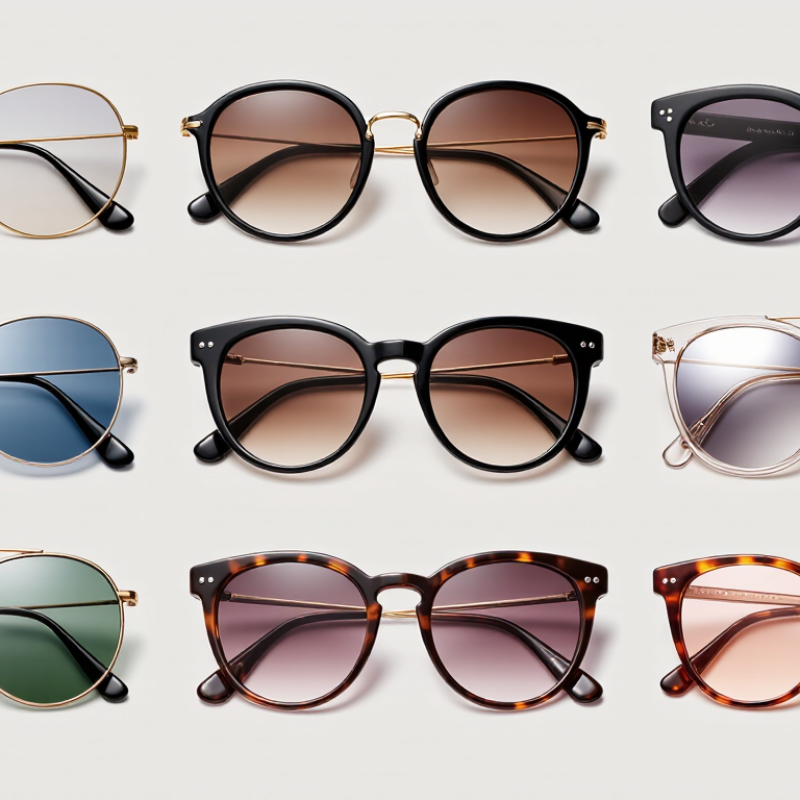
To identify your face shape, pull your hair back and look straight into a mirror. Use a soft tape measure to compare forehead width, cheekbone width, jaw width, and face length. An oval face is longer than it is wide, with a gently rounded jaw. Round faces have similar length and width, fuller cheeks, and softer angles. Square faces often have a broad forehead and a defined jaw; heart-shaped faces are wider at the forehead and narrower at the chin. Diamond faces typically have the broadest cheekbones. These are guides, not strict categories. Your features may overlap.
The Vision Council’s 2023 UV Protection Report documents consumer sunglasses habits, while Grand View Research estimated the global sunglasses market at USD 38.9 billion in 2023. Those figures show how widely eyewear is used, but neither can tell you which frame suits your face. Try frames in person when possible: check that they sit comfortably, don’t press your temples, and follow your brow line. Round Tortoiseshell Acetate Sunglasses can soften angular features, though frame width and fit matter just as much as shape.
Tips: Trace your face outline on a mirror with a washable marker, then step back and compare its widest points. If your result feels unclear, that’s normal. Face-shape labels simplify real variation; trust the proportions you see and how the frames feel.
Round sunglasses soften the impression of angular features by adding curved lines across the brow and cheeks. On square or rectangular faces, medium-sized circular lenses can make strong jawlines feel less dominant. On oval faces, they add a noticeable focal point without dramatically changing the overall balance. That effect depends on scale: oversized rounds may shorten the apparent face, while narrow frames can make it look longer.
The Vision Council’s 2023 Consumer inSights report found that about 76% of U.S. adults use some form of vision correction. It’s a reminder that sunglasses need to work as eyewear, not just as a styling tool. Facial proportions are only part of the fit; bridge position, lens width, and how the temples sit also matter. A frame that looks balanced in a photo may slide or press during daily wear.
Tips: Compare the frame width with your cheekbones, then check where the lower rims sit. Keep a little space between the frame and cheeks when you smile. Try them in daylight, too. Reflections can change how the curves appear. And honestly, “flattering” is subjective; comfort can matter more than matching a face-shape rule.
| 10 Best Round Sunglasses for Every Face Shape How Round Sunglasses Change Facial Proportions | |||||
|---|---|---|---|---|---|
| Round Sunglass Style | Face Shape It Often Suits | Proportion Effect | Frame Details to Look For | Fit Tip | Best For |
| Thin metal round | Square, rectangular, diamond | Softens the appearance of angular features without adding much visual weight. | Fine rims; lens width around 45–50 mm; a bridge that sits comfortably. | Choose a frame no wider than the broadest part of the face. | A subtle, lightweight look |
| Medium classic round | Oval, square, heart | Adds curved lines that can balance a face with noticeable angles or a broader forehead. | Balanced lens height and width; moderate rim thickness. | Check that the lower rims do not rest on the cheeks when smiling. | Everyday versatility |
| Small vintage-inspired round | Oval, heart, narrow faces | Keeps the frame visually compact and avoids overwhelming smaller features. | Smaller lenses, often about 40–45 mm wide; narrow-to-medium bridge. | Make sure the temples do not pinch and the frame does not sit too high. | Petite proportions and understated styling |
| Large round | Oval, rectangular, long faces | Creates a wider, more prominent frame impression and can visually interrupt facial length. | Larger lenses, often about 50–55 mm wide; adequate lens height. | Keep the frame within the width of the face and check for cheek contact. | A bold look on medium-to-large faces |
| Round with a double bridge | Oval, heart, square | Adds a horizontal detail across the upper nose area, drawing attention to the center of the face. | Two bridge bars; a secure fit that does not press on the nose. | Confirm the bridge shape matches the wearer’s nose rather than relying on appearance alone. | More structure and a defined upper frame |
| Thick acetate round | Oval, heart, diamond | Gives the eyes and upper face more visual emphasis; the heavier rim can make delicate features look more defined. | Medium-to-thick rims; frame width proportionate to the temples. | Check total frame weight and ensure the bridge keeps the glasses from sliding. | A noticeable, high-contrast frame |
| Round with a keyhole bridge | Square, oval, heart | Introduces a soft, curved opening at the bridge and can make the center of the frame feel less solid. | Keyhole-shaped bridge; nose contact points should feel stable and comfortable. | Try it on to confirm the bridge does not sit too low or move during wear. | A distinctive bridge detail |
| Round with a subtle brow line | Heart, oval, diamond | Places more visual emphasis near the eyebrows, which may balance a narrower lower face. | Slightly stronger upper rim with rounded lower lenses. | Align the upper rim with the brow area without hiding the eyebrows completely. | More definition across the upper face |
| Soft-square round | Round, oval, heart | Retains curved corners while adding a little structure; this can create more contrast on a round face. | Nearly circular lenses with gently flattened sides or corners. | Look for a frame slightly wider than the cheek area, without extending far beyond the temples. | A softer alternative to a fully circular frame |
| Round with adjustable nose pads | Any shape; especially useful when bridge fit is difficult | The round lens shape sets the visual effect; adjustable pads help position the frame at a suitable height. | Separate nose pads; lens and bridge measurements appropriate to the wearer. | Ask an optician to adjust the pads so the frame sits level and does not slide. | A more customizable fit |
| Fit note: Face-shape guidance is a styling starting point, not a rule. Frame width, bridge fit, lens height, and cheek clearance usually matter more for comfort than face-shape labels. Measurements vary by design; try frames on when possible. | |||||
Round sunglasses can soften angular features, while wider or more structured rims may balance a narrower face. These are useful starting points, not rules; face shape alone cannot determine a comfortable fit. Check that the frames sit securely without pinching your temples or sliding when you look down. The outer edges should not extend far beyond your face, and your eyes should sit near the center of each lens.
Pay attention to lens size, bridge fit, and frame material. Oversized lenses offer more coverage, but they can overwhelm smaller features or touch your cheeks when you smile. A well-fitted bridge keeps the glasses steady, even when you turn your head. Lightweight materials can feel easier to wear for hours, though a flexible frame may not suit everyone. Round Eyeglass Frames come in thin, delicate rims and thicker styles; compare both against your features and usual clothing. There is no perfect formula. Even careful measurements cannot tell you exactly how a pair will feel.
Tips: Try frames on in daylight and check your reflection from the front and side. Smile, look down, and move your head. If they pinch or slip, try another size.
Typical adult frame measurements help you compare fit across round sunglasses. The bars show approximate midpoints of common sizing ranges, not universal recommendations.
Common sizing ranges vary by frame and wearer; lens width, bridge fit, and temple length should be considered together. Choose a frame that sits comfortably and suits your proportions, rather than relying on face-shape rules alone.
Grand View Research valued the global eyewear market at USD 183.36 billion in 2023. That scale offers plenty of choice, but face-shape charts are guides, not fitting rules. A mirror check matters. Look at how the rims sit against your brows and cheeks, and whether the bridge slips when you smile.
Round Metal Frame Glasses are a light, versatile option for angular features, though narrow bridges may need careful adjustment. A face-shape chart can overpromise; cheekbones and bridge height complicate neat categories. Fit still wins.
A round frame should sit level, with its lenses covering the eye area without resting on your cheeks. Look straight ahead, then smile: the lower rim should not bump your face. The temples should follow your head without squeezing or leaving red marks. Check the bridge, too. If the frame slides when you look down, the fit needs attention.
Lens protection is not judged by darkness. The American Academy of Ophthalmology recommends sunglasses that block 99% to 100% of UVA and UVB rays. The World Health Organization estimates that sun exposure may cause or worsen up to 20% of cataracts. Ask for clear UV-protection information, and check that the lenses cover the sides of your eyes reasonably well. A very dark lens without stated UV protection is not a safer choice.
Comfort shows up after a few minutes, not just in a mirror. Try turning your head, reading a phone, and walking under bright light. round eyeglasses frames can feel heavier if thick rims press on the nose, so note pressure points before buying. Fit remains personal; a frame that looks balanced may still slide. That part is easy to overlook.
Round sunglasses deserve gentle care, especially around their curved rims and nose pads, where skin oil collects. Rinse lenses under lukewarm water before wiping; trapped dust can leave fine scratches. Add a drop of mild dish soap, clean with your fingertips, then dry with a clean microfiber cloth. Paper tissues feel soft, but their fibers may abrade lens coatings.
Heat is a quiet enemy. Don’t leave frames on a sunny dashboard or rinse them with hot water; heat can warp some frames and stress lens coatings. Store them in a hard case, not loose beside keys. I still catch myself setting glasses face-down on a table. It seems harmless. It isn’t a great habit.
Care also protects the lenses’ useful performance. The American Academy of Ophthalmology recommends sunglasses that block 99% to 100% of UVA and UVB rays; cleaning cannot restore protection if lenses are damaged or their markings are missing. Check for deep scratches, loose screws, and bent temples, and ask an optician about repairs instead of forcing a frame back into shape. A quick weekly check helps. Small effort, easily skipped.
Oversized men’s aviator sunglasses pair a bold profile with practical features for everyday wear. When choosing a pair, consider the frame’s fit and how it suits your routine, from commuting and casual outings to outdoor activities. Gradient lenses add a contemporary look and soften the transition between different light conditions, while the oversized shape makes a distinctive addition to streetwear and everyday outfits.
For eye protection, look for lenses labeled UV400, designed to block ultraviolet rays up to 400 nanometers. These sunglasses combine UV400 protection with a fashion-forward design, making them a versatile option for a wardrobe. Buyers sourcing from China can explore factory-stocked availability with a minimum order of 10 pieces. Free sample delivery can help you assess the product before placing an order, and worldwide shipping is available for buyers seeking a convenient sourcing option. Check the fit, lens finish, and product details to ensure the style meets your needs.
They should sit level and stay secure. They should not pinch your temples or slide when you look down.
Your eyes should appear near the center of each lens. The frame edges should not extend far beyond your face.
Face shape offers a starting point, not a rule. Compare thin and thicker rims, then check how each feels.
Look straight ahead, smile, and turn your head. Check that the lower rims do not touch your cheeks.
Look for clear information stating 99% to 100% UVA and UVB protection. Dark lenses alone do not guarantee protection.
Larger lenses can cover more area, but may overwhelm smaller features or touch your cheeks. Try them while smiling.
Wear them for a few minutes. Read your phone and walk under bright light; notice nose pressure or red marks.
Not necessarily. Lightweight materials may feel easier to wear for hours, but flexible frames do not suit every preference. I might overlook that at first.
Choosing the right Round Sunglasses starts with identifying your face shape and noticing how its proportions can guide your frame choice. Round frames add soft curves and can create a pleasing contrast with more angular features, while their size, bridge design, rim thickness, and lens shape all affect the overall look. The best pair is not determined by face shape alone: personal style and a balanced fit matter too. This guide compares ten types of round sunglasses and explains which face shapes each may complement, helping you narrow down options without treating any one style as a strict rule.
Before choosing, check that the frames sit comfortably, stay in place, and do not press on your nose or temples. Look for lenses that provide reliable ultraviolet protection, and consider whether the frame width and lens coverage suit your needs. With regular cleaning, careful storage, and gentle handling, a well-fitting pair can remain comfortable and look good for longer.