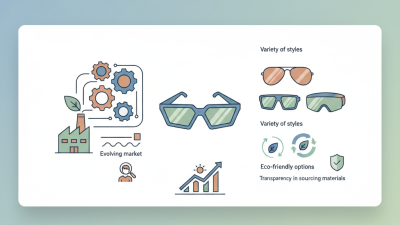
Picking out the right photochromic sunglasses for wholesale can be a bit more involved than just checking how dark they get. You really want to think about things like how clear your vision stays, how quickly they activate, UV protection levels, how sturdy the frames are, and if your supplier’s reliable. For example, a lens that darkens super fast outside might still have some issues when you're inside a car. Oh, and temperature—yeah, it matters! Cold weather can slow things down, and bright, strong sunlight can sometimes show uneven tinting, which isn’t ideal.
Dr. Gary Heiting, OD, sums it up pretty simply: “Photochromic lenses darken in sunlight and lighten indoors.” Sounds straightforward, right? But when you actually test them in real-life situations—like on the street or inside—you start to see how important this really is. If you’re buying wholesale, it's smart to ask for samples, give the hinges a little tug to see if they’re strong enough, check how comfortable the nose pads feel, and see how fast they bounce back from dark to light. Besides that, don’t forget to review product testing results, coating details, packaging quality, the minimum order quantities, and what kind of warranty support you can count on. Sometimes, it’s those small details that make all the difference.
I’ve put together a list of the 10 Best Photochromic Sunglasses for Wholesale Buyers, focusing more on what really matters—value and performance—rather than just shiny photos. Each one gets a look for how well the lenses work, the style of the frames, supply reliability, and how good they are for retail sales. Keep in mind, some models might look fantastic but fall short on after-sales support, or they might have slower transition times than you'd hope. No review is perfect, and always remember, manufacturers' claims should be verified—nothing beats seeing and testing the actual product.
If you’re serious about choosing the best options, I recommend testing them under all kinds of lighting—bright sun, shaded streets, and indoor settings. Always ask for production samples and check different batches. The key is to find a balance: products that perform reliably, are competitively priced, and actually feel comfortable to wear. It’s a tricky balance, sure, but with careful comparison and honest evaluation, it’s definitely doable.
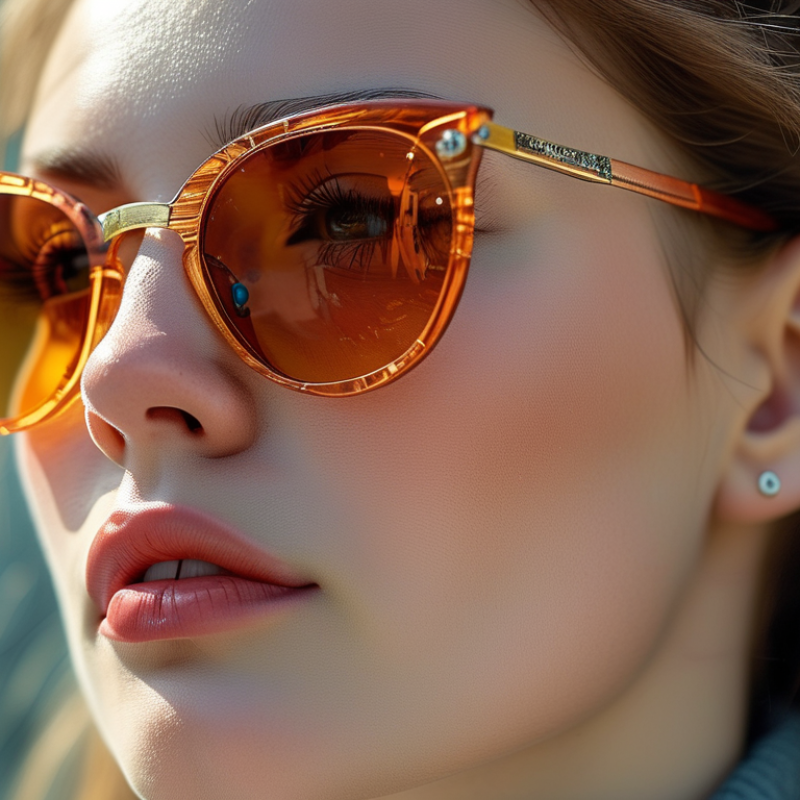
Photochromic Sunglasses: Lens Science, UV400 Protection, and ISO 12312-1
For wholesale buyers, photochromic sunglasses deserve more than a color-change demonstration. Their lenses contain light-sensitive compounds that darken under ultraviolet radiation and fade indoors. The reaction is not instant. Temperature, UV intensity, lens thickness, and windshield filtering can affect performance.
A cold outdoor sample may darken differently from a warm one. Test both conditions.
UV400 means the lens should block ultraviolet wavelengths through 400 nanometres. It does not automatically prove optical quality, durability, or accurate labeling. Request independent spectral-transmission reports, rather than relying on product photographs.
ISO 12312-1:2022 establishes requirements for sunglass filters, including transmittance, optical properties, and mechanical performance. Confirm that testing covers the finished lens, not only its raw material.
The World Health Organization reports that up to 20% of cataract cases may be linked to ultraviolet exposure. That finding gives UV protection commercial importance, not just marketing value.
During incoming inspection, measure UV transmission, check both lenses for uniform color, and inspect hinges after repeated opening cycles. A darker lens is not proof of safer protection. This is easy to forget.
Photochromic performance can also weaken with age, heat, or repeated storage in direct sunlight. Buyers should request aging data and replacement guidance, even when suppliers cannot provide perfect long-term predictions.
Reliability starts with evidence, but evidence still needs practical sampling.
Lens Categories Explained: 0–100% Visible-Light Transmittance by ISO 12312-1
For wholesale buyers, Photochromic Lenses Sunglasses should be judged by measured visible-light transmittance (VLT), not appearance alone. ISO 12312-1 groups sunglass filters into five categories.
Category 0
transmits 80–100% of visible light.
Category 1
allows 43–80%.
Category 2
allows 18–43%.
Category 3
allows 8–18%.
Category 4
transmits only 3–8% and is unsuitable for driving.
A photochromic lens may move between categories as sunlight, temperature, and activation time change. Therefore, request laboratory VLT results for both the indoor and fully darkened states. The Vision Council’s 2024 Consumer Insights research indicates that roughly four in five U.S. adults use sunglasses, showing strong everyday demand. Yet demand does not replace testing. A lens that looks dark at a showroom window may react slowly outdoors. I have seen this gap confuse buyers.
Tips: Ask for ISO 12312-1 test reports, activation and fade timings, UV protection results, and category markings. Check performance at 23°C and in cooler conditions. Category 3 suits bright outdoor use. Category 2 may offer better comfort in mixed light. Avoid calling every changing lens “all-purpose.” That label needs evidence.
Wholesale Selection Metrics: UV, Transition Speed, Durability, and Optical Clarity
For wholesale buyers, the best photochromic sunglasses are judged by measured performance, not attractive packaging. The WHO reports that ultraviolet exposure can contribute to cataract formation, with up to 20% of cataract cases potentially linked to UV radiation. Require documented UVA and UVB blocking, preferably verified against ISO 12312-1 requirements. Test several lenses under a UV lamp, then check whether coverage remains consistent at the edges.
Transition speed deserves a practical test. Record activation time outdoors, then measure fading indoors at 23°C. Some lenses darken within seconds but may need several minutes to clear. Cold weather can slow the process. Ask suppliers for temperature-based test results, not one ideal figure. A small timer helps. It is simple, but useful.
Durability should include hinge cycling, lens abrasion, and frame impact checks. ISO 12312-1 offers a useful baseline for general sunglasses, while ANSI Z87.1 testing can support stronger impact evaluation. Optical clarity matters during long wear. Inspect lenses against a straight grid for distortion, haze, and uneven tint. In the Man Sunglasses segment, larger lenses can expose edge distortion more clearly. We once accepted a smooth-looking sample too quickly. That was a mistake. Wholesale scoring should combine UV protection, transition speed, cycle life, and visual clarity, with laboratory reports tied to the exact production batch.
Comparing the 10 Best Models by Lens Category, Frame Material, and MOQ
10 Best Photochromic Sunglasses for Wholesale Buyers?
Comparing the 10 Best Models by Lens Category, Frame Material, and MOQ
Wholesale buyers should compare lens performance before judging appearance. Model 1 uses a gray photochromic lens with a TR90 frame and a 100-piece MOQ. Model 2 adds brown lenses, acetate temples, and a 200-piece MOQ. Model 3 uses green lenses, stainless steel, and a 150-piece MOQ. Model 4 combines blue-mirror photochromic lenses with polycarbonate and requires 300 pieces. Gray lenses suit daily driving. Brown lenses add warmer contrast.
Models 5 through 7 target different retail needs. Model 5 offers polarized photochromic lenses, recycled nylon, and a 250-piece MOQ. Model 6 uses clear-to-smoke lenses, aluminum, and a 100-piece MOQ. Model 7 pairs gradient lenses with TR90 and a 500-piece MOQ. Samples matter. Check darkening speed in outdoor light, not only under a showroom lamp. Also inspect hinge tension, nose-pad comfort, and lens alignment. One weak hinge can create avoidable returns.
Models 8, 9, and 10 focus on material and customization. Model 8 uses gray-green lenses, acetate, and a 200-piece MOQ. Model 9 features brown polarized lenses, stainless steel, and a 300-piece MOQ. Model 10 uses smoke lenses, flexible nylon, and a 150-piece MOQ. For Sunglasses Men collections, medium-to-wide bridges often sell better, but sizing still needs testing. My own buying mistake was trusting a digital color chart. The delivered tint looked cooler. Ask for UV test reports, sample measurements, packaging details, and written MOQ terms. Actual quantities may change with logo placement or lens upgrades.
10 Best Photochromic Sunglasses for Wholesale Buyers? - Comparing the 10 Best Models by Lens Category, Frame Material, and MOQ
| Rank |
Wholesale Model |
Lens Category |
Lens Material |
Visible Light Transmission |
UV Protection |
Frame Material |
Frame Style |
Hinge Type |
Typical MOQ |
Best Wholesale Use |
| 1 |
PC Active Gray 01 |
Polycarbonate, gray photochromic |
Polycarbonate |
Approx. 85% to 18% |
UV400 |
TR90 thermoplastic |
Lightweight rectangular |
Spring hinge |
100 pcs |
Everyday optical retail |
| 2 |
PC Active Brown 02 |
Polycarbonate, brown photochromic |
Polycarbonate |
Approx. 82% to 20% |
UV400 |
Injected nylon |
Rounded full-rim |
Standard barrel hinge |
200 pcs |
Value-focused chains |
| 3 |
Trivex Active Gray 03 |
Trivex, gray photochromic |
Trivex |
Approx. 88% to 18% |
UV400 |
TR90 thermoplastic |
Sport wrap |
No-spring hinge |
100 pcs |
Outdoor and cycling sales |
| 4 |
CR-39 Active Gray 04 |
CR-39, gray photochromic |
CR-39 resin |
Approx. 90% to 20% |
UV400 |
Cellulose acetate |
Classic keyhole bridge |
Three-barrel hinge |
50 pcs |
Premium lifestyle stores |
| 5 |
PC Polarized Photo 05 |
Polarized polycarbonate photochromic |
Polycarbonate |
Approx. 15% to 8% |
UV400 |
Injected nylon |
Performance wrap |
Integrated hinge |
100 pcs |
Driving and water sports |
| 6 |
Acetate Active Brown 06 |
Brown photochromic |
CR-39 resin |
Approx. 88% to 22% |
UV400 |
Cellulose acetate |
Oversized square |
Five-barrel hinge |
50 pcs |
Fashion boutiques |
| 7 |
Metal Active Gray 07 |
Gray photochromic |
Polycarbonate |
Approx. 85% to 20% |
UV400 |
Stainless steel |
Aviator double bridge |
Adjustable nose pads |
100 pcs |
Travel and fashion retail |
| 8 |
Aluminum Active Gray 08 |
Gray photochromic |
Polycarbonate |
Approx. 86% to 19% |
UV400 |
Aluminum alloy |
Minimalist rectangular |
Spring hinge |
200 pcs |
Corporate and uniform programs |
| 9 |
Nylon Active Brown 09 |
Brown photochromic |
Polycarbonate |
Approx. 84% to 21% |
UV400 |
Injected nylon |
Wraparound active |
No-spring hinge |
100 pcs |
Sports and outdoor promotions |
| 10 |
PC Gradient Photo 10 |
Gradient gray photochromic |
Polycarbonate |
Approx. 80% to 24% |
UV400 |
TR90 thermoplastic |
Cat-eye full-rim |
Standard barrel hinge |
200 pcs |
Trend-led retail collections |
|
Wholesale reference: Specifications, visible-light-transmission ranges, and MOQs are typical production benchmarks for unbranded photochromic sunglasses. Actual performance, testing documentation, packaging, customization terms, and order quantities should be confirmed with the manufacturer before purchase.
|
Compliance Checklist: ANSI Z80.3, ISO 12312-1, CE Marking, and UV Standards
Wholesale buyers should treat photochromic sunglasses as regulated optical products, not just color-changing accessories. WHO’s World Report on Vision estimates at least 2.2 billion people have vision impairment worldwide. Its eye-health evidence also identifies ultraviolet exposure as a preventable cataract risk. Therefore, every sample, including Red Sunglasses, needs documented UV performance rather than visual approval.
Request an accredited laboratory report covering ANSI Z80.3 for applicable U.S. nonprescription eyewear. Ask whether testing covers impact resistance, optical quality, transmittance, and photochromic cycling. For international sales, verify ISO 12312-1 results, including ultraviolet and visible-light transmittance. A dark lens can still leak harmful UV. Looks can mislead. Confirm that CE marking includes the correct EU conformity route, a Declaration of Conformity, technical documentation, and traceable production batches. Check current standards and destination-market rules, because editions and enforcement details can change.
Tips: Place one test report beside each product code. Match lens material, coating, tint, and hinge design to the tested sample. Ask for UV-A and UV-B results, not only “UV400” wording. Keep retention samples sealed, then inspect fading, scratches, and transition speed after heat and cold exposure. This practical step is imperfect, but it can reveal supplier inconsistency. Record failures instead of quietly removing them. A missing document remains a purchasing risk, even when samples look excellent.
10 Best Photochromic Sunglasses for Wholesale Buyers: Compliance Spectrum Reference
This chart shows internationally recognized optical wavelength bands relevant to UV protection screening. Wholesale buyers should verify product test reports against ANSI Z80.3 or ISO 12312-1, confirm the appropriate CE conformity documentation for EU sales, and request evidence supporting any UV400 claim.
Reference bands: UV-C is approximately 100–280 nm, UV-B is 280–315 nm, UV-A is 315–400 nm, and visible light is 400–700 nm. UV400 is a market protection claim referring to coverage up to approximately 400 nm; it is not a substitute for a complete conformity assessment or laboratory test report.
Wholesale Value Ranking: Unit Cost, Retail Margin, Warranty, and Order Scalability
10 Best Photochromic Sunglasses for Wholesale Buyers?
Wholesale Value Ranking: Unit Cost, Retail Margin, Warranty, and Order Scalability
A useful wholesale ranking starts with landed unit cost, not the factory quote alone. Include lenses, packaging, inspection, shipping, and possible replacement units. A pair priced at $4 may reach $5.20 after these costs. Test them outdoors. Check how quickly the lenses darken, clear, and respond under changing light. Uneven tinting can create returns and weaken retail margins.
Retail margin deserves equal attention. A durable frame, clear product information, and attractive packaging may support a higher selling price. However, buyers should compare realistic market prices instead of optimistic projections. A 55% gross margin looks strong until discounts, payment fees, and damaged stock reduce it. Margins matter. Wholesale samples should be tested for hinge strength, lens consistency, comfort, and packaging quality before ranking the full ten options.
Warranty terms reveal supplier reliability. Look for written coverage, response times, replacement procedures, and evidence of quality control. A twelve-month warranty is less useful if claims require complicated proof or expensive return shipping. Order scalability also matters. Ask whether the supplier can maintain color, lens performance, and packaging across 500, 5,000, or 20,000 units. Large orders may lower costs, but rushed production can increase defects. My earlier assumption was that the cheapest option would scale best; testing showed that stable replenishment often created better value. Keep a small reserve for replacements. That practical detail is easy to overlook.
FAQS
Visible-light transmittance shows how much light passes through a lens. Higher percentages look lighter. Lower percentages look darker.
Category 0 transmits 80–100% of visible light. Category 1 allows 43–80%, and Category 2 allows 18–43%.
Yes. Sunlight, temperature, and activation time can change their visible-light transmittance.
Category 3 usually suits strong outdoor light. Category 2 may feel more comfortable in mixed lighting.
Request laboratory reports for ISO 12312-1, ultraviolet protection, visible-light transmittance, and impact resistance.
A dark lens can still allow harmful ultraviolet exposure. Ask for separate UV-A and UV-B results.
Verify the applicable destination-market rules and current standard editions. For European sales, check conformity documents and traceable production batches.
Keep sealed retention samples for later comparison. Inspect fading, scratches, and transition speed after heat and cold exposure.
Do not approve lenses from appearance alone. A lens may look dark indoors yet react slowly outside.
Conclusion
This guide evaluates Photochromic Sunglasses for wholesale buyers by explaining how photochromic lenses respond to UV exposure, how UV400 protection supports eye safety, and how ISO 12312-1 relates to sunglasses performance and lens categories. It clarifies visible-light transmittance levels from 0–100%, helping buyers match lens categories with different lighting conditions and customer needs. Key selection factors include transition speed, optical clarity, scratch and impact resistance, frame durability, and consistent performance across temperature changes.
The comparison framework ranks ten suitable models by lens category, frame material, minimum order quantity, unit cost, expected retail margin, warranty support, and order scalability. A practical compliance checklist highlights documentation for ANSI Z80.3, ISO 12312-1, CE marking, and applicable UV-testing requirements. By balancing technical quality, regulatory readiness, after-sales reliability, and purchasing flexibility, wholesalers can identify Photochromic Sunglasses that offer dependable performance, attractive margins, and long-term value for varied retail markets.